
28 October 2020
Drought and pests have always been two of the key factors negatively impacting the livelihoods of smallholder farmers in sub-Saharan Africa. As many smallholder farmers are reliant on rainfall to feed their maize crops, irregular weather conditions, drought, diseases and pests pose a major threat which can lead to crop failure, hunger, and poverty.
The need grew for the development of hybrid varieties that are able to withstand the drought conditions that farmers face. This has resulted in the launch of a significant public-private partnership that would address the needs of the farmers thus giving rise to the Water Efficient Maize for Africa (WEMA) project.
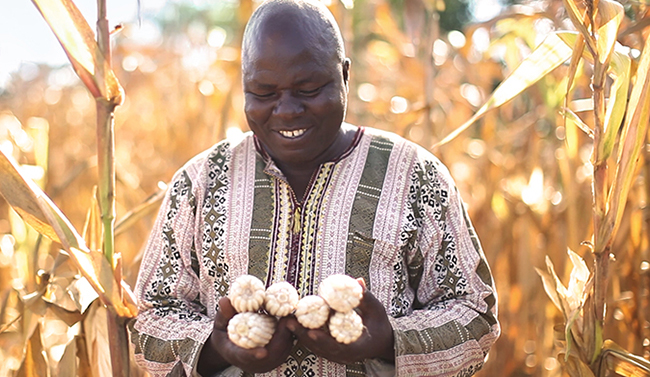
The WEMA project, supported by the Bill & Melinda Gates Foundation (BMGF), the Howard G. Buffett Foundation (HGBF), and the United States Agency for International Development (USAID), was officially launched in February 2008 with the aim of developing and providing drought tolerant and insect resistant maize varieties to smallholder farmers in sub-Saharan Africa. Ultimately this public-private partnership would allow smallholder farmers access to more robust hybrid varieties that would yield a higher percentage of grain under moderate drought conditions than maize varieties that was available on the market.
According to Saheera Haniff, Bayer Strategy and Operations Lead for the Africa Breeding team, this partnership was centred around bringing previously inaccessible technologies to smallholder farmers. In doing so, smallholder farmers are able to improve their yield which would, in turn, improve food security and the livelihoods of these farmers.
The WEMA project was launched in six countries including South Africa, Kenya, Mozambique, Tanzania, Uganda and Ethiopia and was co-ordinated by the African Agricultural Technology Foundation (AATF), a non-profit organisation who aims to provide agricultural technologies to smallholder farmers who previously lacked access to these tools and inputs. In doing so, the AATF sets out to contribute to agricultural transformation to ensure food security in sub-Saharan Africa. In their goal to develop varieties that can withstand various risk factors such as drought and pests, the AATF has partnered with the International Maize and Wheat Improvement Center (CIMMYT), Bayer and the National Agricultural Research Systems (NARS).
Eric Ndou, Jnr Product Development Scientist co-ordinating WEMA Breeding efforts at Bayer, reckons that this project has accelerated the process of technologies accessibility to the needs of smallholder farmers.
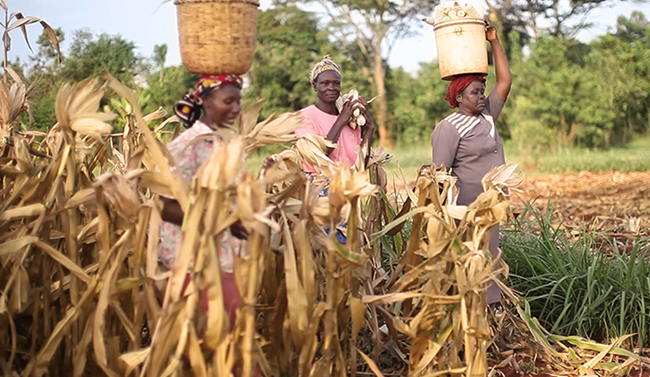
“Change was going to happen, but definitely not at the pace that the project has brought. This project has sped up the process of bringing technology to farmers and has directly and indirectly improved the livelihoods of these farmers – a process that would have taken much longer if the project did not exist.”
According to Eric, the GMO technology developed during this project, opens a world of possibilities to smallholder farmers as it allows them to grow more, using less. “This is aligned to our goal of sustainable farming practices,” says Eric.
Saheera considers this an opportunity for smallholders to not only farm for subsistence, but also for the market.
“There is a need for the laws to allow for genetically modified crops in Africa. The scientific approach provides a safe and sustainable way for the world to keep up with the demands of a growing population.”
It also allows smallholder farmers to face challenges and threats such as drought, diseases and pests like fall armyworm head-on.
“If farmers do not have access to these technologies their ability to produce sustainable harvest is severely impacted. It is not just impacting the farmer, it’s impacting a family, a community, a country,” says Saheera.
The aim of this project is now to continue the commercialisation process of the hybrids developed during the course thereof.
Both Saheera and Eric’s hope for
the future of agriculture in Africa is that the gap between smallholder and
commercial farmers would shrink and that technology would be made more accessible
to all farmers. They hope to see a significant growth in the market, while
giving farmers a choice that is suited to their need.
Bayer hands over combine harvester to the Agricultural Research Council
On 13 October 2020, Bayer, who has contributed to the WEMA project through technology, germplasm and people to develop drought tolerant/insect resistant maize, has handed over a New Holland TR88 combine to the ARC that was used during the course of the project. According to Eric, this asset will enable more efficiency in the ARC’s future work.